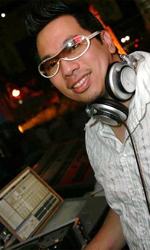
"House music here
in Manila is more driven by dance events and parties,"
begins Brian. "There are a lot of DJs, they're a dime a
dozen here, but there are only a few who get the choice gigs
and residencies. All the top DJs here do not produce original
house/dance music at all. Some of them might use laptops, but
only for DJ playback. Only a handful of DJs can actually work
with software like Ableton live and Protools. Even few who can,
actually produce a track by themselves," he declares.
These are stern words, though in fairness Brian has had to endure
his own criticism.
"In the 90's, I did some remixes of popular OPM (Original
Philippines Music) songs with moderate success. However the
local DJs did not deem my remixes "playable", due
to the awkward nature compared to the foreign tracks that they
were playing. They said my tracks "lacked punch and build
ups" and "did not fit their sets". Dejected,
I stopped for a while and did not go back to it till a couple
of years ago.".
And boy, are many Filipinos grateful for his resilience and
patience. Deciding to learn how to produce tracks that sounded
like his foreign counterparts, Brian opted to learn how to DJ.
"I wanted to have the sensibility of a DJ in producing
tracks. I wanted to see where I had gone wrong in my remixes.
I started DJing in small clubs, worked my way from the bottom,
playing for less pay and working with shitty equipment,"
he explains smiling.
Brian is quite keen to explain the technical side of how he
changed his ways but he also used an old traditional method.
"I forced myself to use my ears to mix," he says laughing.
"But gradually I was learning which tracks make people
dance and what tracks to avoid." >>
|